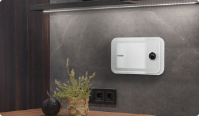
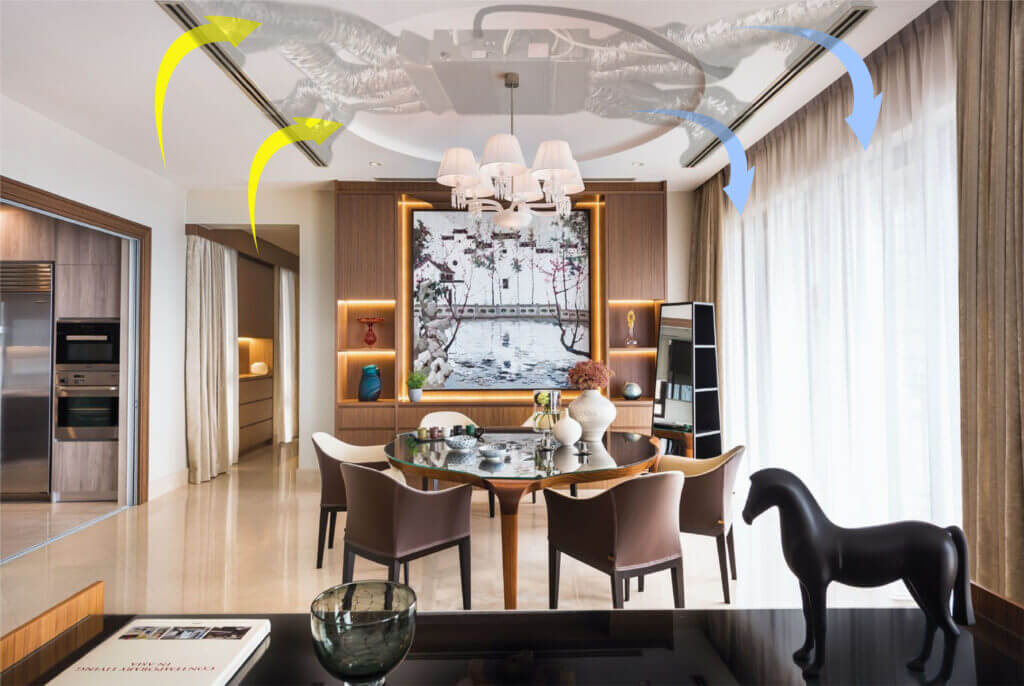
Indoor air quality is often worse than outdoor air. Although there may be less dust, indoor air is often contaminated with many other types of pollution.
The characteristic of ultra-fine dust (PM2.5, PM10) is that they do not easily settle to the ground but float in the air. Therefore, when the outdoors is polluted by this type of dust, your home is no less polluted.
Most of the objects in your home have odors. From beds, cabinets, clothes, furniture, walls to yourself. These odors are caused by volatile organic compounds (VOCs) and this evaporation process is continuous. High concentrations of VOCs are also a form of unpleasant pollution, some types of VOCs such as wood glue smell, wall paint smell, … are even toxic. In a closed environment and the air is not regularly changed, these odors will accumulate, affecting your comfort and health.
Indoor air is often not circulated as well as outdoor air, and is even completely isolated when you close the doors to use air conditioning and air purifiers. Living in a closed environment will gradually consume the available oxygen while rapidly increasing CO2. Stagnant air also creates conditions for moisture accumulation, which helps mold grow.